
Kokedama: a live plant grown in a moss-wrapped ball of soil bound with thread or string.
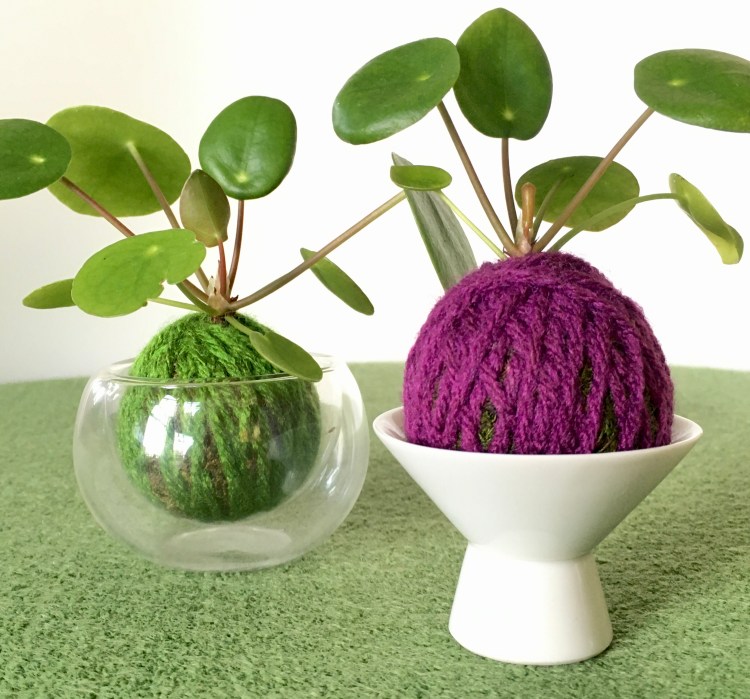
Generally, we use preserved moss for all our kokedama at mini viridi, whether bound in barely visible thread, ropy jute or soft yarn. Preserved moss is helpful for plants that need to dry out before watering. Live moss is better suited for plants that prefer moist environments (ferns for example) as the living moss needs to be continually moist to survive.
We use acrylic yarn on our yarn wrapped kokedama for its ability to retain color (discoloring less easily than natural fibers) and to hold moisture longer for small specimens. Whenever possible, yarn made from recycled plastic is used.
Light
How much light your plant needs depends entirely on the type of plant growing in your kokedama. Every plant is different and its lighting needs can change depending on the season.
Refer to your specific plant in the plant care menu for particulars on both light levels and watering frequency.
Watering Kokedama
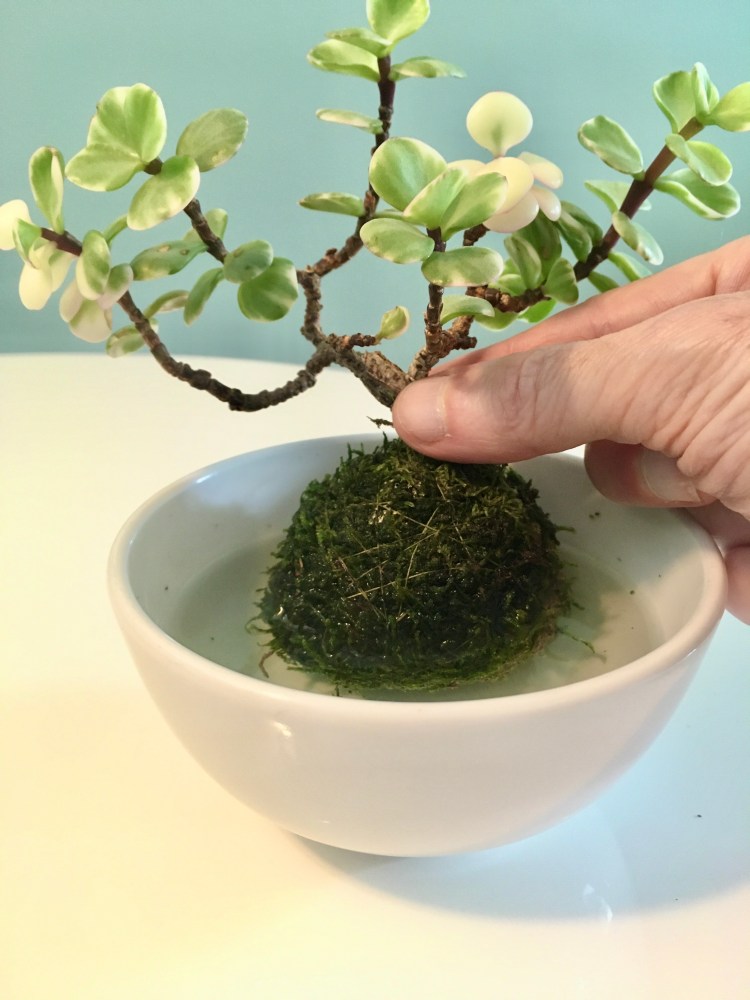
Soak your kokedama for 10 minutes if it’s small, 15-20 minutes for medium or larger. Soak longer for larger kokedama that are very dry.
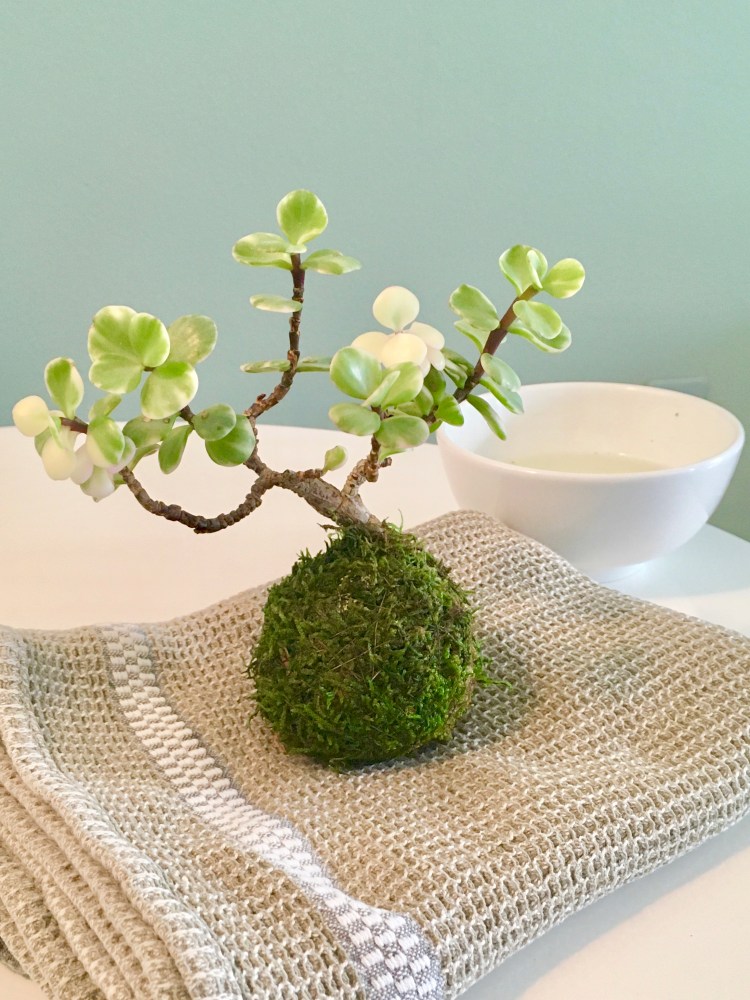
Always drain your kokedama on a towel for 30 minutes after soaking to remove excess water, especially for succulents.
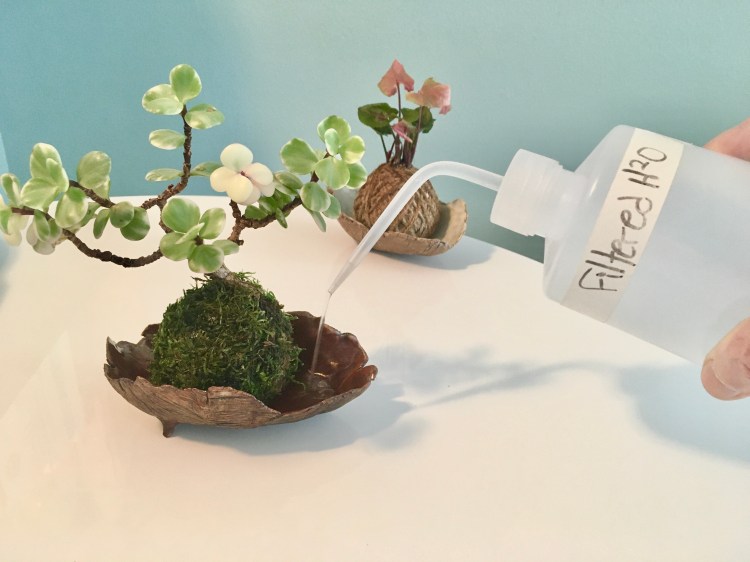
Alternately, you can simply add water to the dish and let it soak from the bottom up for kokedama that sit in a decorative container of some kind. If the dish is very shallow and doesn’t hold much water, you may have to add more water a second time or third to get the ball fully hydrated. Be careful not to overwater. If it feels soggy, drain on a towel for 30 minutes.
How often to water?
• Small and medium sized kokedama once a week
• Large kokedama once every 7-10 days
However, this may change based on the type of plant and also the environment (time of year, dry or humid climate, etc). Please refer to individual sections on the plant care menu for your specific plant and what it likes.
Water one additional time per week during warmer seasons if you’re getting too much drooping, leaf burn, or for thirsty plants who like more moisture (such as arrowhead plants, ferns and begonias). A little drooping is ok, far less problematic than overwatering.
Water a little less during cooler seasons with plants that like to dry out longer, such as succulents, cactuses or plants with thick roots that store water (like spider plants). Overwatering is most often the cause for plants to die prematurely. If you’re getting leaves that yellow and fall off too often, water a less frequently. It’s also possible the plant isn’t getting enough light, though many plants drop yellowed leaves throughout autumn and winter due to going semi-dormant. Water much less often when plants go semi-dormant in the winter, let the soil dry out and don’t let it get soggy when you do water.
Most of the stock at mini viridi is fairly forgiving if neglected, but keep an eye out for badly drooping, dull looking leaves—a sure sign it’s time to water. For succulent type plants, if the leaves look soft and shrunken or a little wrinkly, it’s time to water. Most of these plants will bounce back right away.
Try not to overwater—it’s worth repeating. It’s better to dry out a little too much than to water too deeply. Discolored yellowing leaves with or without brown, dry tips are a sure sign of too much water and/or too little light (or semi-dormancy).
What Kind of Water?
We use reverse osmosis filtered water for komedama. Rain water and distilled are also good. These will have all the dissolved minerals removed and keep the small amount of soil in these kokedama from getting too alkaline from mineral buildup.
Tap or well water is only an issue if your area has very hard water (a high amount of dissolved minerals) or is wildly chlorinated. Most municipal water is acceptable, don’t worry too much…but RO, rain and distilled are great if you feel like going the extra distance.
Feeding
• Once a month for succulents and cactuses
• Twice a month for most tropical varieties
The general rule of thumb for succulent type plants and cactus is to feed once a month with a low nitrogen fertilizer (2-7-7 or thereabouts). Feed April–June and September, October. Skip July and August if your plant variety goes dormant during hot summers. No fertilizing over winter.
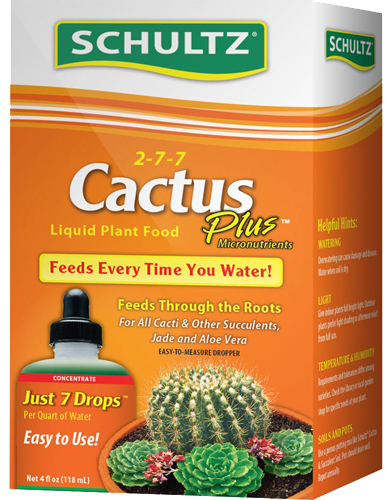
Liquid fertilizers like this one are nice in that they come with a dropper, making it easy to measure out small amounts. 1 drop/8oz. of water.
Use a Cactus/Succulent fertilizer (2-7-7) if you really plan to keep your plants on the side of small and slow-growing.
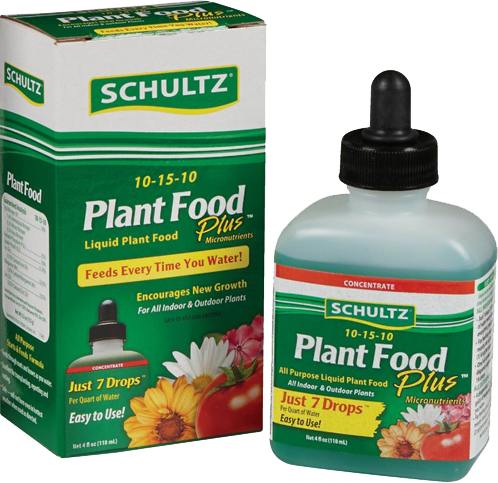
Feed tropical plants twice a month (or aim for feeding every other watering) with a general fertilizer (10-10-10, 10-15-10 or similar). It’s higher in nitrogen (the first number) and supports more vigorous growth for plants that have longer growing seasons and live in rich, fertile environments. Feed year round if it’s actively producing new leaves, but give it a rest over winter if growth appears to slow down.
One drop per 8oz. of water is going to be your mixture for soaking tropical plant kokedama. This Schultz 10-15-10 is what we use.
Granular fertilizers are totally fine (like Miracle-Gro All Purpose, though it’s really heavy on the nitrogen at 24-8-16). Just go light! Measure a touch less than 1/8 teaspoon per 8oz. of water and mix thoroughly.
Replanting
Kokedama outgrow their ball and exhaust the soil just like plants in a pot, but maybe a little faster. The smaller the pot or kokedama, the sooner you’ll need to refresh the soil and trim the roots—kind of the same principles used for cultivating bonsai.
The plants at mini viridi are more tolerant of exhausted soil and tiny spaces compared to most, but after a year it would be optimal to take the kokedama ball apart and remake it with fresh soil. Your plant may tolerate 18 months, even two years left in the same soil, but it may look a little bedraggled and too tired to produce many leaves. Silver Squill and Burro’s Tail in particular are remarkably tolerant of old soil (4+ years), but they’ll love you to bits for giving their soil ball an annual happy birthday.
Until there’s a tutorial on this site for remaking your kokedama, there’s lots of resources on YouTube and books galore on the subject. Option #2 is to undo to soil ball and replant into a pot as you would most houseplants. If treated like a bonsai, you can trim the roots and stems down and keep the plant in a small pot OR just let it go wild in a bigger pot.
Whether remaking your kokedama or planting into a pot, make sure the soil you use isn’t too heavy or has about 10% perlite in it to keep your succulent type plants from getting water logged. Thirsty tropical plants can handle a denser, water-retentive soil if you so choose. Picking through the soil to remove large chunks of wood, rocks and overly big hunks of perlite is a good idea for soil you intend to use for kokedama and small-to-miniature pots.
 miniviridi.com