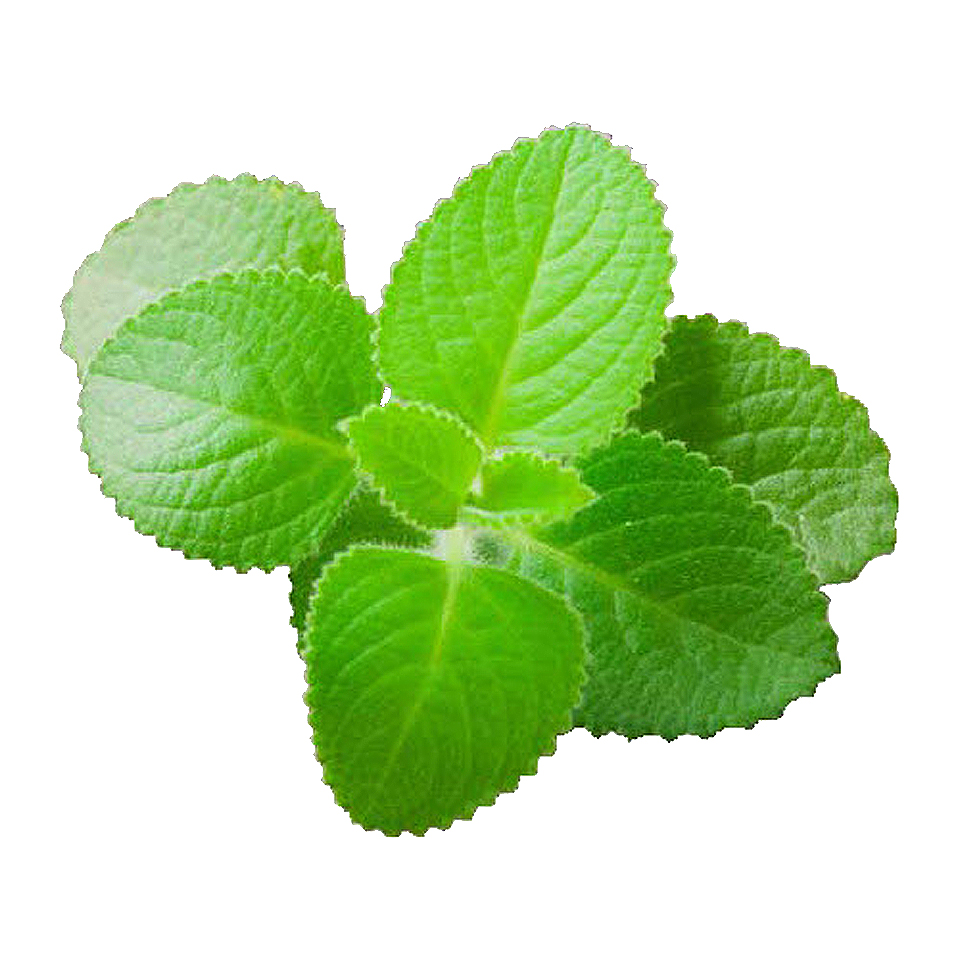
Plectranthus Amboinicus
Also referred to as:

With Plectranthus Amboinicus belonging to the plant family Lamiaceae (mint) and having the scent and flavor of something between thyme and oregano…it’s no wonder the plant’s name has gotten bounced all over the spice cabinet. Being a name collector, it’s also referred to as Coleus Amboinicus. In Tamil, it’s called Karpooravalli. In Mandarin, it is Dao Shou Xiang (到手香) or “fragrant when touched”—and fragrant it is. Averaging out the list of names, we’ll refer to the plant as Indian Mint from here on, but please use and enjoy all the marvelous names it’s come to own.
A semi-succulent plant of unknown origin, it may be native to Africa, possibly India. As the flavor is close to oregano and thyme, its culinary applications could be very similar for Western cooking…but in Eastern cooking, the applications are much wider. Just as often, Indian Mint is used for herbal medicine in treating a wide variety of conditions ranging from stomach and respiratory issues to insect bites, fever and water retention. In Indonesia, it is given to nursing mothers to improve their milk production. In Brazil, China and Southeast Asia, it’s a common household medicinal herb.
Let’s take a look at the list of possible uses and speculations:
Digestion and Stomach Issues
This was used traditionally to settle upset stomachs and relieve irritable bowel syndrome by aiding digestion and soothing stomach inflammation. Brewing tea from the leaves is the most effective way to take advantage of this health benefit.
Respiratory Issues
If you are suffering from a cold, a sore throat, congestion, a stuffy nose, or painful sinuses, you can chew on the leaves or brew a tea from them. The compounds contained in the herb act as a powerful expectorant to remove mucus and phlegm from your respiratory tracts and clear out your sinuses. This can also help to boost your immune system by avoiding bacteria or other pathogens from lodging and developing in your upper respiratory tract.
Treats Fever
If you are suffering from a flu, one of the common symptoms is a fever. Typically, you don’t start getting better until your fever “breaks”—a sign that your immune system is making some headway. This herb is a sudorific, meaning that it motivates sweating, which also helps to clear out toxins through the skin and speed the recovery process.
Reduces Stress and Anxiety
Although a lesser-known benefit, some of the organic compounds and minerals found in this herb have been revealed to be mildly sedative in nature, so this herbal remedy (often in tea form) is offered to people with high anxiety or chronic stress to encourage relaxation, peace of mind, and healthy, restful sleep. Combining with chrysanthemum flowers makes it doubly tranquilizing.
Skin Care
One of the most popular uses of this plant is for an effective skin treatment. From bug bites and stings to eczema and psoriasis, the leaves possess anti-inflammatory compounds that can rapidly reduce redness and swelling, while also eliminating itchiness and irritation.
Anti-Cancer Potential
Research has discovered that the stem of the plant is rich in antioxidants and has the capability to scavenge free radicals. The extract of this plant helped inhibit proliferation of cancer cells and also, has displayed the potential for anti-platelet accumulation ability.
Diuretic/Kidney Health
Acts as an effective diuretic, which means that it can clean the body of toxins by stimulating urination. This also reduces the amount of excess salt and water in the body, keeping the kidneys and lymphatic system functioning smoothly.
Beneficial For Women
Reduces menstrual pains, delivery pains, and headaches. In India and some parts of Indonesia, the herb is given to lactating mothers to increase the milk flow.
Reduce Arthritis
Content of omega-6 fatty acids present in the leaf is supposed to reduce arthritis.
Improve Vision
Used to improve one’s sight. The plant consists of vitamin A that can reduce oxidative stress in the eyes and prevent macular degeneration.
To Eat or To Drink: Basic Preparation
It’s perfectly fine to eat the leaves raw. They have a pleasant crisp and watery texture like iceberg lettuce, but with a bit more fiber. Choose healthy, green leaves and wash them well. One big 3″-4″ leaf may be enough for one person, smaller sized leaves could take three or four leaves to make up one dose. Many recipes call for five to seven leaves…just follow good sense and start small, see how you respond, and don’t overdo it.
For teas: Chop or crush the leaves and place in your teapot or mug, pour in 8 ounces of boiling water. Let it steep for at least 5 minutes or longer, straining out the leaves if you like or just sip around them. Nothing wrong if you eat the steeped leaves too—but for stomach or intestinal inflammation issues, less fiber might be the way to go.
You can google up lots of options for culinary and medicinal applications if you type in “karpooravalli recipes,” so do search around. You’ll find loads of ideas for this aromatic herb.
Plant Care
• Bright Indirect Light year round for indoor planting, will enjoy Bright Direct Light October-April (morning sun or partial shade outdoors).
• Let Soil Dry Between Watering, usually every 7-10 days. Water less in winter when plant goes semi-dormant.
• Feed every two weeks when actively growing.
• Outdoor plant year-round in Zones 10-11 (or summers in all other zones), otherwise grows year-round as a houseplant.
• Trim plant regularly and repot yearly to stimulate new growth.
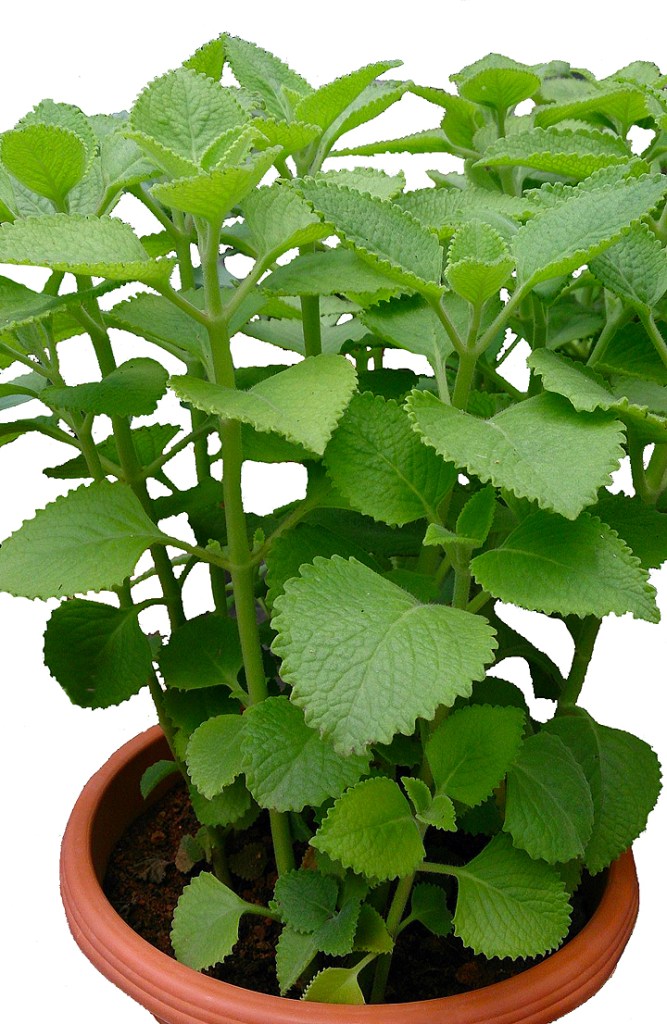
As a semi-succulent, grow it in bright indirect sun indoors (direct sun is fine Fall-Winter). It will tolerate less light indoors, but looses its bushy shape by stretching its stems out in search of something brighter. If you don’t mind the looks, it’ll still be good for herbal uses.
Too much sun and heat will make the leaves curl up like taco shells and might cause the plant to go semi-dormant. Even so, it’ll try to tolerate these conditions, being a real toughy.
Give it free draining soil that doesn’t remain soggy. The top 2″-3″ of soil should be allowed to dry out between watering. It’s worth repeating, let it dry out a bit before watering–it wants less water than a lush plant looks like it would.
Watering During Dormancy
It does go semi-dormant in winter, so water less while it’s less active, maybe once every 14-20 days when healthy leaves start to droop a little. It can go semi-dormant in the summer too if it’s getting too much sun or is in too hot a location.
It may also go semi-dormant any time of year if you neglect to water for a longer period (sometimes over a month). It’ll look shabby—loads of dry, crumbly leaves or pale overall color—but will come back to life in a couple weeks with normal watering and a bit of feeding.
Semi-dormancy is an easy time to overwater without meaning to. Overwatering will cause the lower leaves turn pale (more white/pale yellow than light green) droop and drop off. A little leaf dropping is acceptable from time to time any time of year, a couple older leaves may do this even when you water sparingly…this is normal.
Feeding
This plant grows fast! Feed every two weeks during active growth seasons. It can gobble up fertility in new soil in no time at all. If you see the leaves turning pale green or the lightest yellow-green, it likely needs some feeding with a fertilizer containing just a bit more nitrogen than phosphorus and potassium. Nitrogen promotes chlorophyll, the green pigment in leaves and stems…so if your plant is pale, you know it’s hungry (unless you’ve overwatered badly, and then it may look pale with droopy, white-ish yellow, soggy textured leaves).

Pale with hunger for nitrogen, these cuttings were left in water for far too long before planting into soil. A few weeks settling into its pot will green this baby right up, provided the soil is allowed to dry between waterings.
Notice the droopy leaf at the bottom right. Keeping the cutting in water for too long, then potting it into freshly watered soil has made for a waterlogged leaf. The plant will pull through as the soil dries out, but this leaf will be lost…pretty normal for newly transplanted cuttings.
Does Organic mean Organic?
Since this is a plant you’re maybe intending to eat, you may wish to use an organic fertilizer instead of a chemical fertilizer. But are organic (biological) fertilizers derived from organic (pesticide/chemical-free) sources? What does that even mean?
Organic has two definitions here:
- relating to or derived from living matter
- produced or involving production without the use of chemical fertilizers, pesticides, or other artificial agents
All organic (definition #1) fertilizers are made from organisms: animal waste and byproducts such as bird and bat guano, blood meal, bone meal and feather meal, as well as fish and kelp and other plant materials. These materials may or may not be organic as per definition #2. Regardless, all organic (biological) fertilizers feed the soil in addition to the plant, enhancing the soil’s microbiome.
If you want organic-organic fertilizer, OMRI Listed® products indicate all input materials are organic (definition #2). It would be so much clearer to call this an organic BIOLOGICAL fertilizer, and do away with using organic (definition #1) for this type of product.
Then there are chemical fertilizers (like Miracle-Gro All Purpose) made from non-biological, man-made materials, thus inorganic, but we’re skipping that completely valid option for now because our brains hurt.

This may be the least smelly organic houseplant fertilizer, Not OMRI Listed®) Some sort of scent has been added to it in order to mask the usual “off” smells of organic goo. It’s like stale perfume in a boggy locker room. Because it’s a liquid, the smell doesn’t last long once you water it into the soil. This is a 2-2-2 fertilizer, a bit weak for Indian Borage, but you could apply more often in compensation.
Pets may go after soil watered with organics…it’s all composted animal and plant material after all and sometimes smells delicious to critters. This one seems less interesting to pets, but keep an eye out.
Organic-Organic, OMRI Listed® Happy Frog fertilizer—this stuff is great. Totally smells, it’s granular and requires mixing into the top couple inches of soil AND your pets may want to go after that stinky, stinky dirt even though to us it smells like ammonia and earthy barnyard doo-doo (which is a normal smell for this). Still interested?
As bacteria in the soil composts the biological elements, the smell goes away after a few days to a week…which may be longer than you’d prefer. Choose accordingly.

Repotting and Propagation
Repot your plant once a year, break up the roots and cut the plant back in order to reinvigorate it and stimulate regrowth…best done in early spring. Always use a well draining soil, adding grit or extra perlite if needed to ensure good aeration. You could also just make new cuttings and start the plant over every year, and sometimes this is the good option.
Propagation is usually by cuttings. Cut off a 4″-8″ section of newer growth, strip off the lower leaves and place the stem in a jar of water. Roots usually appear within a couple weeks. You can also put the stem into a paper cup with potting soil, poking a few pencil holes in the bottom. Keep it moist until you start to see new leaf growth (but usually it will have rooted in three weeks time).
Odd Uses for Indian Mint
It’s worth mentioning that here at mini viridi we like to use the dried leaves of this herb for air freshening while doing a bit of vacuuming. One day while housecleaning, the scent blowing from the vacuum after rolling it over a few dried leaves that had fallen to the floor—Wow! Such a wonderful burst of brightness—quite herbal, somewhere between thyme and lychee fruit—dispelling the faint staleness that usually blows out from a well-used vacuum.
If you suction up a fresh, green leaf, only do so after breaking it up some then dropping it straight into the vacuum hose rather than rolling over it with the beater brush. Doing the latter on top of carpeting will only grind a lovely green patch of chlorophyll into the fibers—though it’ll be a wonderful smelling stain. Wherever you find dried up, crunchy leaves, however, it’s safe to roll over them with your vacuum and…ahhh…pleasure! (if you like simple pleasures like we do)
 miniviridi.com